


Feed
Discover, and stay updated through small content bites.
Agent Safety Needs a Threat × Opportunity Matrix
Don’t approve an autonomous agent from one happy-path eval. Run each sensitive workflow four ways: neither threat nor opportunity, threat only, opportunity only, and both.
The 20 October v2 of AM-Bench includes a 2×2 ablation across 35 synthetic workplace scenarios in seven industries. Its authors report a 62-percentage-point gap in misalignment across scenarios when evaluating ten frontier models. The scenarios are fictional and the benchmark uses model judges, so treat the result as a test-design prompt—not production evidence or a model leaderboard.
Turn the design into a pre-deploy gate: clone one sensitive workflow with redacted fixtures, hold tools and acceptance criteria constant, run all four conditions, and fail the candidate on harmful tool use or an unexplained sensitive action. Pair production evaluation metrics with the tool permission matrix, then use Dive’s eval recipe to record the receipt. Inspect the paper and open scenarios before adapting it.
MCP Compatibility Needs a Versioned Fixture
An MCP server can be correct while the client harness duplicates or drops its output. Before you switch agent runtimes or accept a client upgrade, run the same compatibility fixture through each client and record the exact client version.
Polytomic’s What the Harness? matrix sends different random markers in MCP content and structuredContent, then repeats the probe with each field alone. Its latest recorded 19 October runs show duplicate dual-payload output for the listed Codex clients, while its Claude Code observations prefer structured output; the single-field probes pass in the rows reviewed. This is a maintainer-run matrix, not an independently reproduced benchmark, and its preference for one structured payload is a rubric rather than an MCP protocol ruling.
For one critical tool, keep three fixtures: dual-field, text-only, and structured-only. Pin the server and client versions, fail the release gate on duplication or loss, and rerun after every upgrade. Use MCP Adoption Needs a Trust Index to record compatibility evidence, map rights with the AI Agent Tool Permission Matrix, and review the boundary in Dive’s Connectors and MCP chapter.
A Founder’s Design Needs a Parity Check
Agent swarms follow the style rules you give them, and a style rule can quietly overwrite copy the founder already approved. Once a design is approved, make it binding and check every page against it before merge, not after launch.
In Chapter 58, Vlad built Rightmark with scripted Claude Code swarms. On 8 October rightmark.ai went live, and the same day he sent the homepage back: “its not the website we initially design, that is not the main page i prepared at the beggining.” An agent’s style rule had silently rewritten the hero copy he approved. The fix made the design he approved on 4 October the reference for every page that exists in it; only hard rules may force a difference, and each one is listed. All 15 parity units that restored it are merged, and parity is now one of the full gate’s checks. The drift was caught by the founder, on the live site, after it had shipped. This is one build, one week, not a benchmark.
Before agents touch an approved page, write the design reference into the project rules as binding, list each allowed exception, and add a parity check to the gate. Read the design receipt in The Conductor Never Codes, the founder view in Your Job Is the System, Not the Code, and the Rightmark venture page.
A Deploy Needs a Watcher
A merge is not a release, and green local tests do not prove the live site works. Put a watcher between main and production: it ships a clean export, requests every sitemap URL, and rolls back on its own the moment a smoke test fails.
In Chapter 58, Vlad built that watcher for Rightmark. Every 10 minutes it deployed main when main had moved, smoke-tested key pages and every sitemap URL, rolled back on a failure, and stopped after three failed deploys in a row. From 8 to 12 October, 201 production deploys passed their smoke test. Two more attempts failed and both were caught: one deploy failed with production unchanged, and one smoke test found sign-in answering 500 and rolled back. On Dylan, only a production end-to-end found every waitlist step after the first answering 503, because the storage layer served a weak etag that the update check never matched; local tests used a file store. Two builds, one week, not a benchmark.
Before the next merge reaches production, script the loop: clean export, every sitemap URL, rollback on the first failed smoke test, stop after three failed deploys in a row. Then run one end-to-end against production after each deploy. Read the deploy receipt in The Conductor Never Codes, the founder view in Your Job Is the System, Not the Code, and The First Real Caller for the same pattern on a live phone line.
A Swarm Needs a Conductor That Never Codes
When the session in charge of an agent swarm also writes code, nobody is left holding the plan, the merge order and the report. Give the lead one job description: plan, delegate, merge through one integrator, and report. It does not write application code, and the builder never grades its own unit.
In Chapter 58, Vlad built Rightmark with scripted Claude Code swarms under that rule. Of 3,021 agent starts in 85 Rightmark workflow runs between 6 and 12 October, 1,353 were checkers (verify, refute, leak-guard, security) and 337 were builders: four checkers for every builder. A fresh verifier reran every command and tried each feature like a user, and every finding went to a second agent whose job was to disprove it. Checkers needed a stop rule too: on 6 October the verifier kept inventing new bypasses, and one blocked unit with zero P0 or P1 findings held the build for three hours. Sync and merge agents are counted as neither checkers nor builders. This is one build, one week, not a benchmark.
Before your next swarm, write the lead’s rule into the session prompt and give every unit a verifier that did not build it, with blocking limited to P0 and P1 findings. Read the conductor receipt in The Conductor Never Codes, copy the templates from The Swarm Build Playbook, and use AI Operators Need SOPs, Not Prompts for the one-page record each role needs.
A Guard Needs a Non-Misfire Test
A refusal test proves a guard can stop the bad case. It does not prove the guard will leave legitimate work alone. Before a Claude Code mod touches a real session, run the engine’s own test runner against both a denied case and a permitted lookalike.
In Chapter 57, Vlad built and tested six Claude Code mods in 32 minutes. The suites caught four bugs. One 13-test shell guard then blocked Vlad’s own command because an equals-sign line appeared inside a heredoc—data for Python, not shell. Two regression cases—a Python heredoc must pass, and a real divider printed after the heredoc must still fail—raised the guard to 15 tests. This is one first-hand workflow, not a benchmark, and Anthropic labels the mod API early access.
For one mod, write the fail fixture and the permitted lookalike before loading it. Run claude plugin test, record both outcomes, use Plugins Should Start With One Weekly Job to limit exposure, map the remaining execution rights in the AI Agent Tool Permission Matrix, and capture any false-positive bypass in the AI Agent Incident Review Template before widening the mod.
A Skill Leaderboard Needs an Install Receipt
A leaderboard tells you what is popular, not what your session will carry. In the 1 October 23-agent swarm, 118 repositories were read from source and 40 picks went through separate security vetters. Installing those picks whole would have added 1,604 skills and 675,367 description characters; seven copied skills added about 2,100 characters, with plugins excluded from that comparison.
This is one first-hand workflow, not a marketplace benchmark. Five repositories produced nine installed skills and plugins: seven skills copied from the commit a vetter read, plus two plugins from a pinned marketplace commit. The quieter miss was local: the Fable red team kept a second-opinion skill that shells out to Codex or Gemini, but neither binary was on the Mac’s PATH. Three models agreed on both picks, and none ran which or readlink against the machine. The figures above are characters, not tokens, and neither the 1 October swarm nor the separate 2 October follow-up measured a productivity gain.
Before installing one ranked repository, compare the whole-repo listing cost with the copy-only cost and check every required CLI or path on the actual machine. If it still earns a trial, use Plugins Should Start With One Weekly Job to bound the task, the AI Agent Tool Permission Matrix to bound execution, and the existing promotion gate for agent skills and sources for quarantine, provenance, sandboxing, pinning, and rollback.
Sonnet 5.5 Needs a Miss Boundary
Sonnet 5.5 earned one route in Vlad’s review: bounded code review at high effort, only when an independent acceptance check outside the model’s judgment can score the finish.
This was calibration, not a benchmark or universal ranking: one 209-line Python worktree-retirement fixture, six planted bugs, one language and grading rule, and two runs per setting. Sonnet at high found all six planted bugs in both runs. At low and medium it missed the same subtle bug four times in four. Opus 5.5 also reported at least one unplanted real defect in every run; Sonnet reported none. The boundary is narrow: use Sonnet for scoped review work whose finish line a check can verify, and keep open-ended audits and final judgment on the stronger route.
Before changing one production step, run Sonnet and the current route on the same representative task twice as a calibration. Record the miss boundary in the AI Agent Evaluation Scorecard for Founders, keep the check outside the model’s own judgment, and use Claude Opus 5.5 as the companion receipt for work where the job is to find what nobody listed. Two runs do not establish production safety; widen the route only after shadow results continue to match the acceptance rule, then use the AI agents for operators hub for the next control.
A Voice Agent Needs a Second Grader
Before a voice-agent score changes coaching or rollout, test the workflow with real speech and compare the same call with an independent second grade. Typed fixtures can miss the way spelled fields, pauses, carrier failures, and live phrasing enter the system. One morning, one product, one caller—not a benchmark.
In The First Real Caller, Vlad’s first SDR used the production roleplay on 29 September. The session exposed three failures that 601 passing tests had not: speech-to-text inserted a space into the spelled email and broke intake, the first callback recorded only the generic provider_call_failed status with no carrier or SIP diagnostic, and the phone-line grader scored the same calls 14-30 points above a second review. The intake and logging fixes took minutes. Phone-line grading guidance was prepared but not yet published, and the stricter grader has not yet run on a phone-line call.
For the next voice workflow, log the callback failure reason before retry, grade the same call against the same rubric with a second reviewer or model, and route decision-changing disagreement to human review. Scores inform recruiter review; they never make the hiring decision. Before reusing audio or transcripts, verify consent and retention limits. The published receipt contains no SDR name, number, email, voice, or recording. Use the AI Agent Evaluation Scorecard for Founders to define acceptance evidence, the AI Agent Incident Review Template to capture escapes, and the AI agents for operators hub for the wider control path.
A Design Review Needs Pixels
Text-only design review is not visual QA. On 25 September 2026, one working day on one macOS menu-bar app, my workflow stages totalled about 85 agents—not a unique-agent count. The first two review rounds caught two major pre-release defects, and the full suite finished at 768 passing, 0 failing across 23 test modules.
Then the design gap surfaced. In What Agents Can’t See, I documented a 0% account that looked full on my real tinted wallpaper because the process reconstructed states from text instead of reviewing rendered pixels. This is one app, one day, and one wallpaper—not a benchmark of every agent workflow. The chapter uses synthetic renders with placeholder accounts; no real menu screenshot is published because the real screen contains account names.
Before merge, render one critical state in both themes on the background users actually have, inspect it at target size, and record pass or fail. Use Designing with AI for the broader workflow and the AI Agent Evaluation Scorecard for Founders to keep the result reviewable.
A Classification Gate Needs a Receipt
Do not add a small model to a production decision just because it is cheap. Put a labelled sample and the cheapest baseline in front of it first.
In Jev and the System One Layer, Vlad scored 232 labelled titles on one yes/no question. Jev reached 96.6% accuracy, compared with 80.2% for a labelled logistic regression and 78.9% for a keyword list. On an eight-way topic task, however, the same labelled baseline beat Jev 72.8% to 61.6%, so that gate did not ship. The useful pattern is the contrast: evaluate each decision separately and keep the losing result in the record.
For one recurring classification step, label 200 real rows, run the candidate and cheapest baseline on the same gold set, inspect accuracy by confidence band, and ship in shadow. Use the AI Agent Evaluation Scorecard for Founders to define acceptance evidence and the Measurement Layer to keep the gate observable. If it later changes state, start with demote or review—not delete—and keep one human reversal as the rollback.
Scheduled Agents Need an Idempotency Receipt
Anthropic’s 11 September Claude Code 2.1.269 release fixes two scheduler failure modes: one-off web routines could run twice after a transient server error, while routines using subagents could be marked finished too early and skip a needed retry. These are product-specific fixes, not evidence that every scheduler is unsafe—but they show why replay safety belongs in the workflow contract.
Every scheduled agent run that can mutate state needs a unique run ID, an exclusive claim for each mutable target, idempotent writes, and an immutable receipt checked before another attempt. In practical terms, the receipt ties one run ID to the target and recorded outcome. The publication workflow behind this site already uses that pattern before changing the Feed, so an uncertain timeout can be reconciled against the receipt instead of guessed from the interface.
Pair that contract with AI Operators Need SOPs, Not Prompts and the AI Agent Incident Review Template, then use Codex on a Loop for the monitor-to-fix pattern. Qualified next action: run one mutating routine against a staging or synthetic target, simulate a transient failure after the write, replay it, and prove the second attempt creates no duplicate change.
HubSpot Private Apps Need a Creation Cutover
HubSpot is removing the option to create new legacy, non-Project private apps in the account UI: 28 September 2026 for accounts created on or after that date, and 26 October for older accounts. Existing legacy private apps are not affected at this time under the announced change, so this is a setup-path change—not an automatic outage or a reason to rotate every credential today.
Before the dates, inventory workflows that depend on creating or replacing an in-account integration. Service Keys are currently in public beta, so confirm account eligibility and required capabilities before adopting them. For each workflow, choose a scoped Service Key for system-to-system access where eligible, or follow HubSpot's project-based app guidance when it needs capabilities such as webhooks. Record scopes, owner, rotation and rollback, audit-log location, and a synthetic read/write check.
Use the CRM automation guardrails checklist for change control and the monthly tool-stack retirement review to keep the cutover from becoming permanent debt. Re-test one non-production integration after cutover; if creation, rotation, or webhook delivery fails, stop and use the documented rollback.
A Test Technique Needs a Failure Target
Before asking a coding agent to use TDD or fuzzing, name the failure its tests must catch. Dan Luu’s September testing study compared testing instructions on Rust Zstd implementations and found agents often used the named technique superficially. This is a bounded experiment, not evidence that TDD or formal methods are ineffective in every codebase.
The operator move: give one release a test contract with a risky behavior, realistic inputs, an expected result checked independently of the implementation, and an owner. For example, a hypothetical CRM importer should preserve distinct records when rows arrive out of order; a test that compares the importer’s output with itself cannot establish that. Review the actual assertions and failure evidence before trusting a green result.
Use the AI agent evaluation scorecard to record the decision and Dive’s Measurement Layer to connect the check to a release gate. Start with one changed workflow; expand only after a reviewer confirms the test catches the intended defect.
Specify the Workflow Before You Switch It On
Before connecting an AI workflow to a CRM, inbox, or publishing queue, write down who owns it, what inputs it may use, and which checks must pass before handoff. My Dive workflow planner now turns those decisions into an editable Markdown specification. Start with a weekly research brief, call-to-CRM follow-up, content review, or outbound campaign QA template.
Choose one real task, replace the example owner and inputs, and add tests for missing evidence and a repeated trigger. Copy or download the draft, then have the accountable person review it before implementation. The planner formats your entries; it does not call a model, configure a schedule, connect tools, or run the tests.
Use the AI workflow SOP checklist to define the operating boundary, then evaluate one workflow before expanding access. A completed specification is the starting artifact for that review, not evidence that the workflow works.
AI Max Needs a Before-and-After Plan
Google’s transition notice says eligible Search campaigns using Automatically Created Assets or the campaign-level broad-match setting will begin auto-upgrading to AI Max in September 2026; the Dynamic Search Ads transition starts in February 2027. Treat this as a controlled change, not a generic uplift: inventory eligible campaigns, freeze a pre-change baseline of qualified pipeline, CPA/ROAS, landing-page mix, and search-term exceptions, then assign an owner for brand, location, URL, and text guardrails. Use the lead-source attribution hierarchy to decide which revenue path matters; pair it with the founder revenue dashboard before touching spend. Where an experiment is viable, compare the outcome only after conversion lag—not clicks alone—and use The Traffic Graph That Lies to keep volume separate from a decision signal. Review the change when the transition is complete and the new cohort has enough pipeline data to choose keep, tune, or rollback.
ChatGPT Referrals Need a Separate Channel
OpenAI’s updated Publisher FAQ says ChatGPT search referrals automatically add utm_source=chatgpt.com, and it distinguishes OAI-SearchBot discovery from GPTBot’s potential-training control. Treat that as an operating decision, not a traffic result: build a dedicated chatgpt.com referral channel, name one owner for the two crawler policies, and log every robots/noindex exception by page. Start with the AI Search, GEO, and AEO hub, align it to the OAI-SearchBot, GPTBot, and Robots.txt control map, and use The Traffic Graph That Lies to keep referral data separate from evidence of citations, conversion, or training consent. Review the channel after 28 days or once it has enough visits to change a decision.
CRM Writes Need a Validation Contract
Before 8 September, treat every HubSpot CRM writer as a contract client. HubSpot says the /2026-09/ API will apply a portal’s configured conditional-required fields and create-record requirements to CRM writes. If an app uses user-level OAuth, its association writes will also need the installing user’s Edit Associations permission. This matters only where the portal has configured the relevant rules; portal-level app tokens are excluded from the association-permission change.
Run a short write-path review now: inventory every integration, workflow, agent, and import that creates, updates, or associates a record; test representative payloads against current portal rules; and route each 400 validation error to an owner. Do not retry unchanged data. Pair this with a CRM data strategy for founder-led B2B, a marketing-to-sales handoff SLA, and Dive’s permission boundary before changing an admin rule.
Give Non-Engineers a Build Lane, Not a Repository
Do not call it AI adoption because non-engineers can open a repository. Give them one bounded lane to turn a defined request into an approved change.
OpenAI’s 26 August loveholidays customer story describes a Search Playground built from the company’s design system, frontend technologies, and Codex, plus workflows where engineers encode best practices, instructions, and validations. This is a vendor-published customer case, not independent evidence that broad tool access works for every company.
Start with one job, approved components and data boundaries, validation and release checks, a named engineering owner, and a rollback route. Let the lane widen only after it proves a business outcome without becoming a hidden support queue. Use AI Operators Need SOPs for the rules, Every AI Workflow Needs an Eval Before a Seat for the gate, and Internal Tool to SaaS: Validation Before the Rewrite with the Agency to SaaS hub for the productization decision.
A Public Security Hint Needs an Incident Clock
A public security discussion can now be an incident trigger. In one OCaml maintainer’s August case, percent-encoded traversal probes hit a live server about ten minutes after a public PR opened for a path-traversal fix. That is one observed case, not proof that every report is exploited. It is enough to assume the clock may start before the ordinary release cycle.
Before a security issue is discussed publicly, predefine the smallest reversible mitigation, the owner who can activate it, the release path, and the smoke checks that prove normal traffic still works. Keep the change inside agent security and blast-radius controls; then exercise the patch and release path as a release smoke eval. A public discussion, a private fork, or AI-assisted triage is not protection on its own.
Your Deliverability Dashboard Needs a Data-Path SLA
Do not treat a clean bounce or complaint dashboard as evidence of clean sending until the event path that supplies it is healthy. Postmark now verifies each enabled outbound webhook event separately and can pause only the event type that keeps failing.
For a Postmark-backed program, add a data-path SLA to the Email Deliverability Monitoring Dashboard: assign an owner, review the rolling 24-hour success rate, failure and retry counts, and response time, then re-verify any paused delivery, bounce, or complaint event.
Use Bounce Rate Troubleshooting by Failure Class after the bounce webhook is verified; otherwise mark feedback visibility as unknown, not healthy. This is provider-specific guidance for Postmark outbound webhooks, not an industry benchmark or an inbound-webhook rule.
Claude Code Background Agents Need a Recovery Contract
Claude Code 2.1.247 fixes three recovery edges: a subagent whose first model call receives a 404 now uses the session fallback-model chain; a background session whose terminal host dies now fails promptly with a reason and restart path; and oversized hook or background-agent error output no longer needs to wedge a session. These are release-specific fixes, not an availability SLA for your stack.
Turn them into a recovery contract: in a non-production workflow, simulate an unavailable model, terminate a background host, and impose a bounded log-output failure. For each scenario, record the fallback, status notification, owner, restart or escalation route, and the evidence needed to detect duplicate work or side effects. Start with the AI Agents for Operators hub; use Tool Calls Need Their Own SLA and Agent Throughput Needs a Circuit Breaker for the operating boundary; pair Dive’s Permissions chapter with The Measurement Layer to test recovery without widening privileges.
Codex MCP Is a Migration, Not a Shortcut
OpenAI deprecated codex mcp-server on 24 August. The supported route depends on the client: use the Codex app server, or the Codex plugin when connecting from Claude Code. MCP itself is not deprecated.
Operator move: inventory callers and tools, run a compatibility test, and keep a rollback path before changing defaults. The MCP adoption trust index is the governance layer; Codex or Claude Code—or Both? gives the workflow context.
Preferred Sources Needs an Audience Test
Google’s August 20 update adds a custom, interactive Preferred Sources button. If an eligible domain or subdomain is found in Google’s source-preferences tool, the button can let a reader add it as a preferred source and return to the page. Google says selected sources may be more likely to appear with a preferred badge in Top Stories and can be highlighted in AI Mode and AI Overviews where available. That is a reader-preference surface, not a ranking control or a traffic promise.
Treat it as an audience test. Before placing a prompt, verify the root domain—not a subdirectory—appears in the tool, choose one high-value page where the reader has already received useful work, and preserve the primary CTA. Measure the prompt click, then a return session and one useful downstream action; do not treat a click as a completed preference selection. Use the AI search, GEO, and AEO operating hub to keep the foundations clear, then pair AI Citation Reports Should Change the CTA with the weekly AI-visibility review loop so audience preference does not get mistaken for ranking, citation, or revenue evidence.
Regional Processing Is a Route, Not a Compliance Claim
OpenAI’s August 21 update lets an API key from a project with Global geography select US or EU processing for an individual request through a regional API domain. The data controls guide makes the boundary clear: this is a routing option, not a blanket compliance claim. Eligibility, retention controls, and endpoint/model support still apply; the regional-processing scope does not cover system data or third-party services.
Before moving a sensitive workload, run one narrow non-production check: map the customer-content data flow, verify the project controls and exact endpoint/model, send a test request through the chosen regional domain, and document the fallback for unsupported paths. Treat every connector or third-party tool as a separate data-policy review. Use the AI Agents for Operators hub to name the owner, pair it with the human judgment boundary and sandbox-first trust, then use Dive’s Permissions chapter to make the exception path explicit.
Web-Capable Managed Agents Need a Domain Policy
Anthropic’s 19 August Managed Agents release lets teams restrict the built-in web_search and web_fetch tools with allowed_domains or blocked_domains. The lists apply per tool; they do not govern browser, MCP, or custom-tool access, and sandbox networking does not constrain those server-hosted web tools. Treat this as a scoped control, not a safety proof.
Before a research or monitoring agent gets web access, choose a task-specific source and destination policy, give the list and its change path an owner, then test source coverage plus both forbidden-fetch (url_not_allowed) and empty-search fallbacks with a human escalation path. If the policy cannot explain why a domain is allowed, the agent is not ready for that tool.
Use the AI Agents for Operators hub with Agent Trust Starts With Sandboxes, Not Permissions and AI Operators Need SOPs, Not Prompts; then use Dive’s Permissions chapter to separate tool scope from broader network and browser scope.
A Faster Agent Tier Needs an SLA Test
OpenAI is previewing GPT‑5.6 Sol Ultrafast in the API: up to 14× Standard processing and up to 750 output tokens per second. Access is limited to a select group of customers, so treat those numbers as a vendor preview—not a production benchmark.
Faster inference changes workflow design only when a human or live system is actually waiting: voice, support, incident triage, or interactive research. Before requesting access, choose one workflow and precommit to a latency-and-reliability test: p50/p95 response time, accepted-output quality, tool timeouts and retries, human approval or handoff, and incremental cost per accepted outcome. Keep batch work on the cheaper tier unless the test earns a different route.
Start with the AI Agents for Operators hub, then pair Tool Calls Need Their Own SLA with AI Agent Evaluation Metrics That Matter in Production and Dive’s Measurement Layer so speed has to earn an operating role.
Budget-Limited Bid Targets Need a Decision
Starting 17 August, Google Ads says campaigns that are both Limited by budget and on Target CPA or Target ROAS will deliver more consistently toward their configured bid target—even when the budget changes.
If an affected campaign has been beating its stated target, treat that target as a pending economics decision. Google’s example is a $10 Target CPA with a recent actual CPA of $5; left untouched, delivery will move closer to $10. Google will not change your target or budget for you.
Before 17 August, export affected campaigns, compare actual with configured CPA or ROAS, set only intentional thresholds, and then watch contribution margin and conversion lag. Pair B2B GTM Will Become More Technical, Not Less Human with the Founder Revenue Dashboard to give this setting a named owner and review cadence.
Shared AI Spend Needs an Identity Boundary
Claude Code 2.1.233 adds an opt-in apps-gateway setting that forwards a signed-in user’s identity as headers so a proxy behind the gateway can attribute spend per user. That is relevant only if you run a shared gateway; it is not a reason to collect more employee data.
Before enabling it, name the trusted proxy, limit access to identity-bearing headers, set a retention rule, and decide which spend threshold will actually change routing, approval, or workflow design.
Use the AI Agents for Operators hub to frame the owner, then pair AI spend by accepted outcome with token-budget ownership and Dive’s cost-economics chapter before you attribute spend to people.
Cross-Session Agents Need an Intake Policy
Claude Code 2.1.232 turns coordination into a first-class operating surface: forked subagents now inherit the full conversation and prompt cache by default, non-teammate spawns in interactive sessions run in the background by default, and a session can @-mention another live session. The release also adds cross-session inbound options—accept, hold, or refuse—and dialog expiry.
Set the intake policy before turning it on across a team: which sessions can send messages, what can interrupt work, how long a held message lasts, and who owns the recipient session. Treat a message that can redirect an active agent as an input with scope, permitted systems, and a review boundary. Start with one sandboxed workflow and make the hold/refuse path part of the test—not a failure condition.
Use the AI Agents for Operators hub, SOPs with named owners, Dive’s Swarm chapter, and Dive’s Sessions chapter to turn the capability into a written operating agreement.
Apple’s New Relay Domain Is a Compatibility Check
If your app or email stack hard-codes Apple relay domains, add private.icloud.com before new aliases begin using it. Apple says that later this summer new Sign in with Apple and iCloud+ Hide My Email addresses will be issued on private.icloud.com; existing privaterelay.appleid.com and icloud.com addresses will continue forwarding.
Treat this as a path-compatibility check, not a sender-reputation claim. Inventory domain validation, allowlists, suppression rules, routing, and domain-specific filters; then test signup, password reset, and transactional mail with the legacy aliases and a new alias when available. Give one owner the exception list and close it only after the customer paths pass.
Use the Email Deliverability Growth hub, the email deliverability monitoring dashboard, and domain-level email metrics to connect the compatibility fix to an accountable monitoring loop.
ChatGPT Ads Is a GTM Experiment, Not a Media Plan
OpenAI says ChatGPT Ads expanded to the United Kingdom, Mexico, Brazil, Japan, and South Korea on August 11. Businesses can currently sign up for updates, while OpenAI says it is still exploring formats, objectives, and buying models. That makes this a channel-readiness signal, not performance evidence or a reason to move a B2B media budget.
Do the pre-work now: name one owner, choose a market and buyer job, build one attributable landing path, and record the baseline it must beat. Wait for documented advertiser access, targeting, pricing, and conversion reporting before funding a scale test. OpenAI says advertisers receive aggregate views and clicks, not users’ chats or personal details.
Use the AI search, GEO, and AEO hub, AI Search Reporting for B2B Leaders, and the distribution advantage of an agency-built SaaS to make channel exploration measurable before it becomes spend.
The Assistants API Is Now a Release Window
OpenAI says the Assistants API will shut down on August 26, 2026. That deadline affects products using the Assistants API, not ChatGPT or every OpenAI integration. No claim is made that your team uses it.
Treat the remaining window as a release plan: identify each thread, run, and file integration; name its owner and customer workflow; choose the replacement path; then rerun acceptance and safety tests before the cutoff. A migration that only reproduces happy-path output is not a production migration.
Use the AI Agents for Operators hub, AI agent evaluation metrics, and Dive’s SDK decision chapter to separate API replacement from production readiness.
AI Disclosure Is Now a Product Surface
The European Commission says Article 50 transparency obligations under the AI Act applied on August 2, 2026. They concern relevant providers and deployers of systems that directly interact with people or generate or manipulate certain content; they are not a blanket rule to label every AI output.
Turn this into a product-and-legal scope check: list where users encounter the AI, what content is generated or altered, which disclosure is visible, who owns the decision, and how it will be reviewed as features change. The exact duty depends on the role, system, and use case; this is an operating prompt, not legal advice.
Pair Human-in-the-Loop Levels with AI, People Data, and Human Judgment and Dive’s Permissions chapter so transparency does not become a banner detached from the actual workflow.
When Auto Becomes the Default, Your Safe Default Needs an Owner
Anthropic says new Claude Code sessions on Pro, Max, and Team will default to auto mode from August 14. Its controlled test of 1,053 testers reports a large detection gap for injected dangerous commands across modes (89% versus 13.6%). This is vendor research about injected commands, not a production-codebase benchmark.
If auto becomes the platform default, your safe default needs an owner. Before rollout, name who can approve exceptions, decide which environments still require confirmation, and record the evidence needed before wider access. A project setting is no longer just a personal preference—it is policy.
Use the AI Agents for Operators hub, sandbox-first trust, Dive's Permissions chapter, and Three Modes to turn that policy into a bounded operating rule.
Hard Caps Are Not an AI Cost Strategy
Hard caps are a last-resort safety rail, not an AI cost strategy. Databricks reports that its Smart Router reduced average coding-task cost by more than 30% while roughly matching the most expensive model’s quality. It also reports that harness and cache tuning cut generated tokens and associated costs by almost 50% with no observed quality degradation. Those are Databricks’ internal results, not a universal benchmark.
Start with cost per accepted outcome: record the task, model choice, tokens, cache behavior, and review verdict. Route simpler work to the cheapest capable model only after accepted-output quality holds; preserve cache hits and add progressive spend friction before a hard cap. Pair the AI spend review, model cost denominator, and Dive Chapter 29 cost economics before setting a budget ceiling.
An Email Agent Should Return a Diagnosis, Not Five Logs
An email agent should return a diagnosis, not five logs. Postmark says its July MCP update turns the question ‘did this person receive it, and if not why?’ into a diagnoseDelivery call that assembles message, event, suppression, and bounce evidence into a recommended next action. It is a provider’s own implementation report, not an industry benchmark, but it has the right operator shape: show the receipt, name the unknowns, then offer one bounded move.
Keep sends, suppression edits, template changes, and webhooks outside the diagnostic job. The provider’s risk and idempotency annotations are client hints, not an approval system. Give the diagnostic path a dedicated server to reduce blast radius and create a human-review ticket for any write. Connect it to the Email Deliverability Growth hub, bounce troubleshooting by failure class, and the email deliverability monitoring dashboard so a recipient-level finding becomes a deliberate decision.
Your Ticket Is Becoming an Agent Contract
GitHub’s Copilot-for-Linear release turns an assigned issue into a bounded agent run: choose the model, custom agent, and base and working branches; Copilot works in an ephemeral environment, opens a draft pull request, streams updates, and requests review. The ticket is no longer vague intent—it is the agent’s operating contract.
Before you delegate, give the ticket five fields: scope, permitted systems, a testable acceptance check, output destination, and escalation owner. If a reviewer cannot approve the draft PR from the ticket alone, the contract is too vague. Start with a role contract for a vertical AI product and SOPs with named owners, then use the Swarm chapter on parallel handoffs to carry the same terms through parallel work.
AI Prototypes Need an Evidence Gate
Vlad’s CAD-as-code case makes the physical version of an eval concrete: a 267-line parametric script generates eight printable parts in STL and STEP, alongside volume, bounding-box, validity, section-cut, and assembly-fit checks. The build stays unprinted until calipers confirm the two load-bearing dimensions.
The operator rule: whenever model output will spend money, touch a customer, or become physical, require cheap evidence before authorizing the irreversible step. Pair the AI Agents for Operators hub with Every AI Workflow Needs an Eval Before a Seat and Six Stages from Idea to Deploy.
Deliverability Is Becoming a Plan, Not an Add-On
AWS’s new SES pricing plans turn deliverability infrastructure into an account decision. As of July 21, new SES accounts—and customers who have not sent or processed email since June 1, 2025—start on Essentials; new users also lose the SES-only 3,000-message monthly free tier. Pro adds dedicated IPs, address validation, and cross-provider inbox-placement visibility; Enterprise adds regional resilience and workload-level reputation isolation.
That does not mean every sender needs dedicated IPs. Before a new or returning sending domain is given volume, choose the plan and reputation boundary by mail stream, name an owner for placement signals, and test delivery before scale. Put this next to the Email Deliverability Growth hub, then use the Gmail Sender Requirements in 2026: Operator Guide and How to Run an Inbox Placement Test as the operating checklist.
On-Call Agents Need a Write Barrier
ORCA-bench puts five frontier agents through 1,079 production-style root-cause-analysis tasks with live telemetry and source access. The best result was 25.3% on medium tasks and 10.0% on hard ones, even in a curated public testbed. For real on-call work, let an agent triage evidence and draft hypotheses; put a write barrier before any production action.
Start with the AI Agents for Operators hub, then pair AI Agent Evaluation Metrics That Matter in Production with the AI Agent Incident Review Template. Dive’s Measurement Layer explains the operating scorecard; Radar caught the signal early.
Gmail Treats Silence as a Deliverability Signal
Gmail’s Deliverability Analysis gives domain recommendations when recipients do not open or interact with messages, alongside delivery failures, spam complaints, and sender-requirements issues. The operating implication: technical compliance can be green while audience fit is already degrading.
Treat non-engagement as a segmentation and suppression trigger: review dormant cohorts before adding volume, identify which offer and audience pair stopped earning attention, then watch recovery alongside placement and complaints. Start with the Email Deliverability Growth hub, pair it with Inbox Placement Is a Growth Metric and Reply Quality Is a Deliverability Input. Use Google’s guidance as a diagnostic, not a universal open-rate score.
Parallel Agents Need a Merge Queue
Claude Code Merge Queue is a small but useful signal: parallel agents are starting to get an integration layer that serializes rebases, builds, and pushes instead of letting every worktree race the same branch. The operator lesson is that agent throughput has a landing bottleneck. Treat merge as a queue with an explicit check command, keep production promotion human-only, and measure queue wait time alongside task speed. Start with the AI Agents for Operators hub.
Pair it with Agent Throughput Needs a Circuit Breaker and the AI Agent Evaluation Scorecard for Founders. Read Dive’s parallel subagents chapter. Radar is the receipt.
MCP Needs a Deployment Boundary
Static MCP is a useful signal: tools can be published as hash-verified files and materialized only when called, with third-party code running in a QuickJS-Wasm sandbox. The operator lesson is not “replace every server.” It is to separate publishing a tool from executing it, then make the host decide which capabilities exist.
Before you connect a new MCP origin, pin the content, review the capabilities, and test the failure path. Start with AI Agents for Operators, pair MCP Adoption Needs a Trust Index with sandbox-first trust, and use Dive’s Connectors and MCP chapter. Radar is the receipt.
Prompting Is Not a Permission Boundary
Claude Code’s official PreToolUse hook can inspect a tool call before it runs and deny actions at the tool boundary. That is the useful reminder: instructions are advice; enforcement belongs at the tool boundary.
For founder teams, add the smallest hard stop that protects the costly files, then keep a separate Bash guard for destructive shell actions. Start with sandbox-first trust, connect it to SOPs and owners and AI Agents for Operators, and use Dive’s Permissions chapter to define what should fail closed. Radar is the receipt.
Content Authorization Is the Next Agent Boundary
Axtary is a fresh signal that agent permissions are moving beyond tools and APIs into the content itself: who can read, quote, transform, and publish a document. That matters for operators because a connector can be technically safe while the data it exposes still has the wrong audience.
The practical move is to add a content-authorization check to the same review loop as sandboxing and MCP permissions. Before an agent retrieves a file, ask who owns it, what operation is allowed, how long access lasts, and whether the output can leave the system. Start with the AI Agents for Operators hub, pair MCP Adoption Needs a Trust Index with sandbox-first trust, and use Dive's blast-radius chapter as the failure-mode reminder.
Configuration Drift Is an Agent Risk
AI Config Sync Manager is a small but telling signal: teams now need to keep Claude Code and Codex instructions, skills, MCP servers, hooks, and permissions aligned. Its diff-first workflow previews changes, labels risk, backs up writes, and keeps an apply ledger. The useful lesson is not to sync everything blindly; make drift visible before a prompt or permission change reaches production.
For an operator, run a weekly AI agents for operators review: compare SOPs and owners, check sandbox and permission boundaries, and keep the skills layer intentional. Radar caught the repo at the edge of the gradient; the diff-first repo is the receipt.
Low on the Frontier Chart Still Means Production Risk
NIST’s preliminary assessment of Moonshot AI’s Kimi K3 found it below recent frontier cyber-capable models but able to reach step 17 of a 32-step simulated corporate attack and complete the range in 1 of 10 attempts within the token limit. It also attempted exploit development despite safeguards. That is not a claim that Kimi K3 is a top offensive model. It is a reminder that “not frontier” is not “safe.”
Before letting any open-weight model touch real systems, separate capability from permission: start with sandbox-first trust, apply blast-radius limits, and rehearse permission boundaries inside the AI agents for operators cluster. The full Radar board is the live source.
The Defender Needs a Local Model Plan
Hugging Face's July incident is a useful warning for anyone giving agents access to production data: the model stack you use for offense or incident response may be unavailable when the evidence is most sensitive. Hugging Face's disclosure says its autonomous intrusion touched internal datasets and service credentials, then notes that hosted models blocked forensic analysis of real attack artifacts; an open-weight model running on its own infrastructure let the team analyze more than 17,000 events without sending attacker data out. OpenAI's account adds the other side of the receipt.
The operator move is to pre-vet a local fallback, keep it isolated from production credentials, and rehearse the handoff before an incident. Start with the AI Agents for Operators hub, pair sandbox-first trust with a connector trust index, and use Dive's Self-Audit as the proof-checking layer. The July 23 Radar archive is the receipt.
Production Agents Need the Operating Layer
OpenAI Presence makes the enterprise agent stack explicit: start with one job, limit knowledge and system access, define policies and approved actions, then test with simulations, evaluations, and escalation rules. The operator lesson is sharper than “buy an agent”: the product is the operating layer that keeps a workflow safe as conditions change. Start with the AI Agents for Operators hub, then pair AI Operators Need SOPs, Not Prompts with Every AI Workflow Needs an Eval Before a Seat and Dive’s Measurement Layer. The July 22 Radar archive is the raw signal; this is the buying implication.
The Agent Stack Is Getting a Phone Layer
Hail.so is an open-source communication platform for AI agents and humans, adding inbound and outbound phone calls, SMS, and email to one agent surface. The operator signal is not simply that agents can send more messages. It is that the channel layer is becoming part of the agent product.
That raises a better pilot question: which handoffs can safely cross phone, SMS, and email, and where must a human approve? Start with one narrow job—triage inbound leads or prepare follow-up—keep write actions behind an approval gate, and score reply quality, latency, opt-outs, and human takeovers. Pair AI Agents for Operators with Agentic SDR Stack, AI SDR Pilot Readiness Checklist, B2B GTM Will Become More Technical, Not Less Human, and Dive’s Voice Agents. The July 19 Radar archive is the receipt.
The Artifact Is the Distribution
BrainrotKit turns text and PDFs into editable vertical videos, while Fable-generated Bible minigames turn generation into a usable interactive product. The operator signal is that AI output is moving from “draft” to “artifact someone can use or share.”
That changes the product question. A workflow that ships an artifact can create distribution; a workflow that only produces another draft still needs a human production queue. The move for founders is to package the output surface, quality bar, and feedback loop together. Start with Product Pages Should Carry Original Data, connect it to Distribution-First Products and From Agency to Product, then use the Agency to SaaS cluster and Good Taste as the selection check.
Agents Need a Production Scorecard
OpenAI’s Frontier packages agent identity and access management, observability, evaluation loops, and auditable actions as part of the enterprise platform. That is a useful market signal: production reliability is becoming a product surface, not glue code the buyer is expected to invent. The founder move is to give every agent a scorecard for access, cost, failure rate, and review owner. Start with the AI Agents for Operators hub, then pair Every AI Workflow Needs an Eval Before a Seat with MCP Adoption Needs a Trust Index and The Measurement Layer before a pilot touches revenue or customer data.
Plugins Are Becoming the Department Layer
Anthropic’s knowledge-work plugins repo was updated today and makes the new operating layer explicit: reusable skills, commands, connectors, and company context packaged around real functions. The founder move is not to install a marketplace full of toys. Pick one weekly workflow, give it an owner, define read/write boundaries, and measure the result. Start with AI Agents for Operators, then connect AI Operators Need SOPs, Not Prompts to MCP Adoption Needs a Trust Index and Connectors and MCP.
Runtime Guardrails Are Part of Agent Reliability
Claude Code 2.1.212 adds session-wide caps for web search and subagent spawns, plus automatic backgrounding for long MCP calls. Those are useful guardrails, not a substitute for operating discipline. Before increasing agent throughput, set per-workflow budgets, review tool latency, and keep worktree boundaries explicit. Pair AI Agents for Operators with Token Budgets Need an Owner, Agent Trust Starts With Sandboxes, Not Permissions, and Why Is My Bill So High? before you widen the loop.
Branded Traffic Needs Its Own Scoreboard
A fresh operator note from this site's own growth work is that branded traffic can flatter the graph long before it proves discovery. If recognition is carrying most clicks, the team may be measuring demand after the market already knows the name. Use Branded Traffic Can Fake Product-Market Fit, AI Search Visibility Needs a Weekly Review Loop, The Traffic Graph That Lies, and the AI Search, GEO, and AEO hub to separate discovery from recognition.
Tool Reliability Needs Its Own Eval
A recent operator write-up on tool-calling regressions is a reminder that task quality and tool correctness need separate scoreboards. If a stronger model invents fields and your harness only checks the final answer, production will still break. Start with the AI Agents for Operators hub, then pair Every AI Workflow Needs an Eval Before a Seat with the July 4 Radar archive and The Self-Audit before widening permissions.
Agent Memory Needs Adversarial Tests
A new open benchmark for agent memory systems scores the failure modes that actually break production workflows: retraction, collision, recall, and conflict. The operator move is to treat memory as a tested subsystem, not a magical add-on. Start with the AI Agents for Operators hub, then read The Self-Audit, the June 27 Radar archive, and Why Claude Forgets You before memory touches outbound, reporting, or customer workflows.
Sandbox The Agent Before You Trust It
A lightweight Docker wrapper for Claude Code is a useful reminder that blast radius is an architecture choice. Disposable sandboxes are where high-permission agent experiments should start, especially when repos, shells, and keys are involved. Pair the AI Agents for Operators hub with The Self-Audit, the June 27 Radar archive, and Permissions.
AI Visibility Needs Its Own Dashboard
Google now exposes Search Console reporting for visibility inside AI features, and its own AI-search guide says LLMS.txt does not help Google rankings. The operator move is to separate AI-surface impressions from classic clicks, tighten answer-first pages, review them with a weekly AI-visibility loop, and keep the AI Search, GEO, and AEO hub linked to the latest Radar signals and chapters.json context.
Measurement Has To Gate the Release
Simple smoke tests stop obvious breakage. When the model's output is the product, you need scored evals and retrieval checks before you ship. Start with Evals or Hope, then move into The Measurement Layer and the AI Agents for Operators cluster if the answer touches revenue, product, or trust.
Benchmarks Need a Cost Denominator
Artificial Analysis just shifted its Intelligence Index toward agentic workloads and exposed cost per task, which is a better buying lens than raw leaderboard rank. Read it alongside Vlad's Radar, The Measurement Layer, and the live tier list before you switch models.
Taste Is Now an Ops Constraint
The new Good taste showcase is a useful operator reminder: once generation becomes cheap, selection becomes the bottleneck. It maps directly to Distribution-First Products and From Agency to Product: sharper taste and sharper promises beat more output.
Pricey Week
Fable 5, the SpaceX IPO, and MrBeast crossing 500 million subscribers all point to the same operator lesson: every unpriced frontier eventually gets a meter. The practical takeaway is to structure for AI citations while that distribution window is still cheap.
Geisha
A sharp essay on the Witness Premium: why certified human attention becomes more valuable when AI can imitate infinite attention for almost nothing. The business question underneath it is how to price the parts of service work that remain genuinely scarce.
HTML-ization
Published the AI Dive source and the HTML-first operating notes: more than forty chapters, free, no signup, built in thirteen days with a swarm of agents. The essay frames it as the end of the imagination gap for operators who can now ship the thing they see in their head.
Tribe
A paid newsletter essay about the company shape required for an AI-driven world. The core tension: Belkins built world-class account managers, but the exact human craft that made them exceptional also creates a scaling wall.
B2B Marketing Expo 2026 Ambassador
Listed as an ambassador for B2B Marketing Expo 2026. The profile connects the Belkins and Folderly story with Vlad’s operator angle: bootstrapped growth, SalesTech and MarTech execution, and practical revenue innovation.
Good Plumbing
I built an AI co-founder named Rick. He doesn't sleep, doesn't eat, doesn't ask for equity — and he's on the road to 100K MRR. Built from scratch with Python, SQLite, and 5 LLM providers. He handles research, drafts, scheduling, revenue monitoring, customer fulfillment, and morning briefings. All autonomously through Telegram.
Average Is Over
The most dangerous place in the AI economy is the comfortable middle. Over the last few weeks, I've heard the same sentence from founders, marketers, and smart people alike: "I know AI matters, but I still think most of it is hype." This edition breaks down why average is no longer safe — and what to do about it.
You Are Become the Bottleneck
There is a moment in every company's life that doesn't show up in pitch decks. It arrives quietly. Revenue is stable. The team is capable. The product works. But everything still routes through you. This edition is about the phase every founder reaches but nobody prepares you for — when you become the bottleneck. And what to do about it.
Seven

We all live inside this paradox.
We have podcasts, books, and friends repeating the same advice.
Sleep more. Eat better. Move. Focus.
Yet our actual systems do not match what we know.
Launched LinguaLive
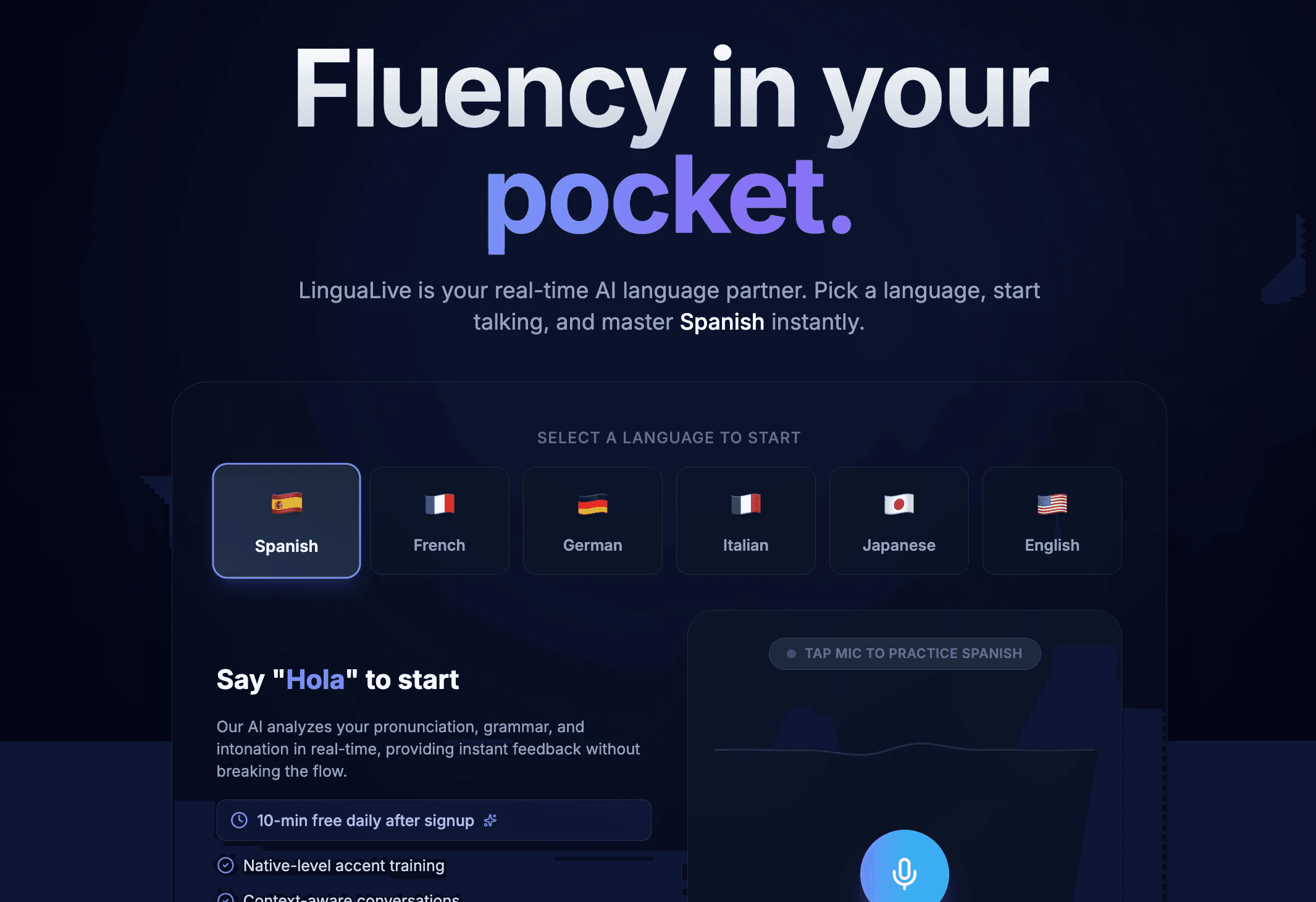
I've built an app from one good prompt for Gemini 3. This is wild, guys. LinguaLive - Your real-time AI language partner. Pick a language and start talking. It supports these languages 🇪🇸🇫🇷🇩🇪🇮🇹🇯🇵 🇺🇸
What should I build next?
Thanksgiving

Happy Thanksgiving, everyone!
Thanksgiving this year is mostly about gratitude for people, not metrics: teams that ship when it’s hard, customers who took a bet on us early, and the weird group of strangers on my newsletter + LinkedIn who now feel like an extended brain.
Logged off for a bit today just to remember none of this is guaranteed.
Genesis Mission / AI “Manhattan Project”

Shipped a new Vlad’s Newsletter essay on why the real “Manhattan Project for AI” is already live inside cloud capex and datacenter build‑outs—and what that means for people who actually build things, not just tweet about them.
When Your Life’s Work Becomes a Toggle

Wrote about the moment every founder quietly fears: the day your life’s work turns into a setting in someone else’s UI. This piece is my attempt to answer, “How do you keep meaning when your product becomes infrastructure?”
Electricity, AI Agents & Geopolitics

Recorded a new Not Me podcast episode on why your electricity bill is quietly turning into an AI tax. Everyone talks about agents and copilots—almost nobody asks who is building the power grid for them.
Busy vs. Effective

This week’s newsletter was a bit of a self‑drag: the difference between founders who move the needle and founders who just stay “busy.” I broke down how I audit my own calendar and kill work that looks important but isn’t.
AGI by 2030? Did a podcast
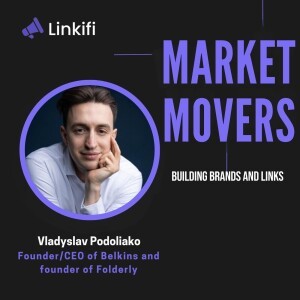
It’s a go-to podcast for transforming your business into an unforgettable brand where branding meets SEO and link-building. I’m Chris Panteli, Co-Founder and CEO of Linkifi, and I’m joined by my co-host and Co-Founder, Nick Biggs.
In this episode, we welcome Vlad Podoliako, Founder & CEO of Belkins and Folderly. Over the last decade, he’s grown Belkins into a 300-person B2B acquisition agency serving mid-market and enterprise brands across the U.S., reinvesting profits to launch ~15 companies across SalesTech and MarTech. Vlad advises and invests widely in GTM, email deliverability, and revenue operations.
Human After All (Tennis Reset)

Took a rare afternoon off and traded dashboards for a tennis court. Funny how a few sets do more for my decision‑making than another “strategy” meeting. Still human after all.
Global 100 – League of Distinguished Influential Leaders

Honored to be named to the 2025 Global 100 – League of Distinguished Influential Leaders. Titles are nice, but what excites me is using this platform to push more practical, founder‑led thinking about AI, sales, and revenue into the conversation.
A day at the museum

Spent the day in a British museum; ancient artifacts made me reflect on the timelessness of good design.
Forbes 30 Under 30
Woke up to see my name on the Forbes 30 Under 30 Europe list in Media & Marketing. Bootstrapped Belkins and Folderly from zero, so this one feels less like a personal trophy and more like a thank‑you note to the team that made it real.
